
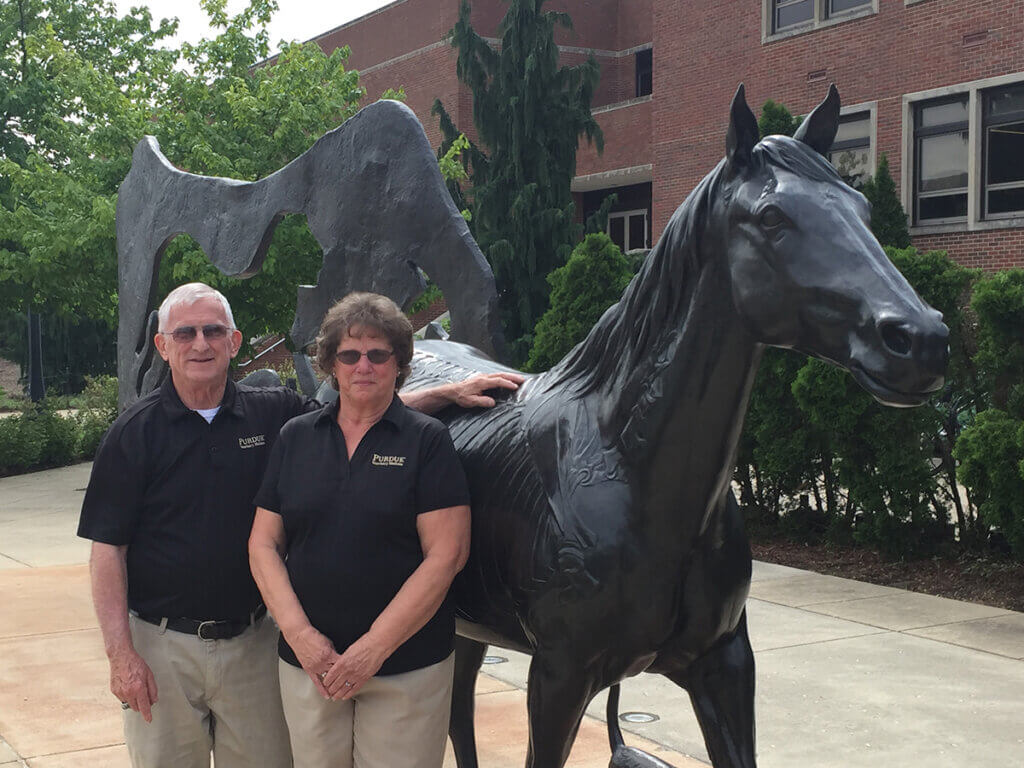
In the spirit of Veterinary Nursing Appreciation Week, the Purdue University College of Veterinary Medicine would like to recognize a special couple that has made a difference in the lives of veterinary nursing students – Mr. Harry and Mrs. Freida Latshaw. Harry is a graduate of the Purdue University College of Agriculture, receiving his Bachelor of Science in animal sciences in 1967. He continued his education in the College of Veterinary Medicine receiving his master’s degree in veterinary physiology and pharmacology in 1984. He worked in the College of Veterinary Medicine for 28 years. From 1972-1994 he worked as a large animal anesthetist, and from 1994-2000 he was assistant to the director of the program. In 2000, he retired from Purdue to work for Vetamac, a veterinary anesthesia company he founded in 1990. He is now restoring old anesthetic machines he collected during his career.
Together, they have generously created two endowments that provide financial support to outstanding veterinary nursing students on an annual basis. In addition to these endowments, the Latshaws also became one of sixty Pacesetters who made a significant contribution to the Leave A Print campaign to support the new Purdue University Veterinary Hospital facilities that will enhance the future of veterinary nursing and veterinary medicine.
PVM Director of Development Operations and Donor Stewardship Amanda Dunkle had the opportunity to ask Harry a few questions about why he has chosen to support veterinary nursing.
What inspired you to create the Harry and Freida Latshaw Student Awards and the Harry and Freida Latshaw Scholarship to benefit veterinary nursing students?
A desire to provide a meaningful financial award for a veterinary nursing student that has excelled academically and to provide a scholarship for a deserving nursing student. Veterinary nursing students have been a part of my life for 45 years, and I almost feel an obligation to contribute to the students and their education.
Why do you feel veterinary nursing is so important?
I think the profession speaks for itself. Forty-five years ago, veterinarians did not know what veterinary nurses were supposed to do. Now the profession has several recognized specialty areas in clinical veterinary medicine. The veterinary nurse is an integral part of the veterinary team.
What leadership qualities do you feel are most helpful in a veterinary nurse and why?
Integrity, open-mindedness, the ability to communicate, discipline, and confidence are important qualities for the veterinary nurse to possess. They have to be able to be a productive team member.
What has it meant to you to have the opportunity to learn more about or meet your award and scholarship recipients?
Students always keep me young, so any time I have the opportunity to interact with students it is always a refreshing time.
How do you think the new hospital will impact veterinary nursing?
It will help provide the Purdue Veterinary Nursing Program with the most current clinical skills and equipment. This will allow the students to enter the profession and be confident of their skills.
What advice would you give our current veterinary nursing students?
Students need to realize that one of the most important aspects of their education is the network they build while they are in school. This network includes faculty, staff, veterinary students, and their own classmates. Veterinary medicine is still a relatively small profession and a few good connections can be beneficial.
Sincere thanks to the Latshaws for their ongoing involvement and dedication to veterinary nursing at Purdue! If you would like to join them by supporting veterinary nursing, give online now or email PVMgiving@prf.org for more information.
