
Celebrating Black History Month – the Story of Purdue Veterinary Medicine’s First Black Graduate, Dr. William Dunn

In celebration of Black History Month, the Purdue University College of Veterinary Medicine highlights one of its own history makers – Dr. William Dunn. When he earned his DVM degree in 1971, Dr. Dunn became the first Black male graduate of the college.
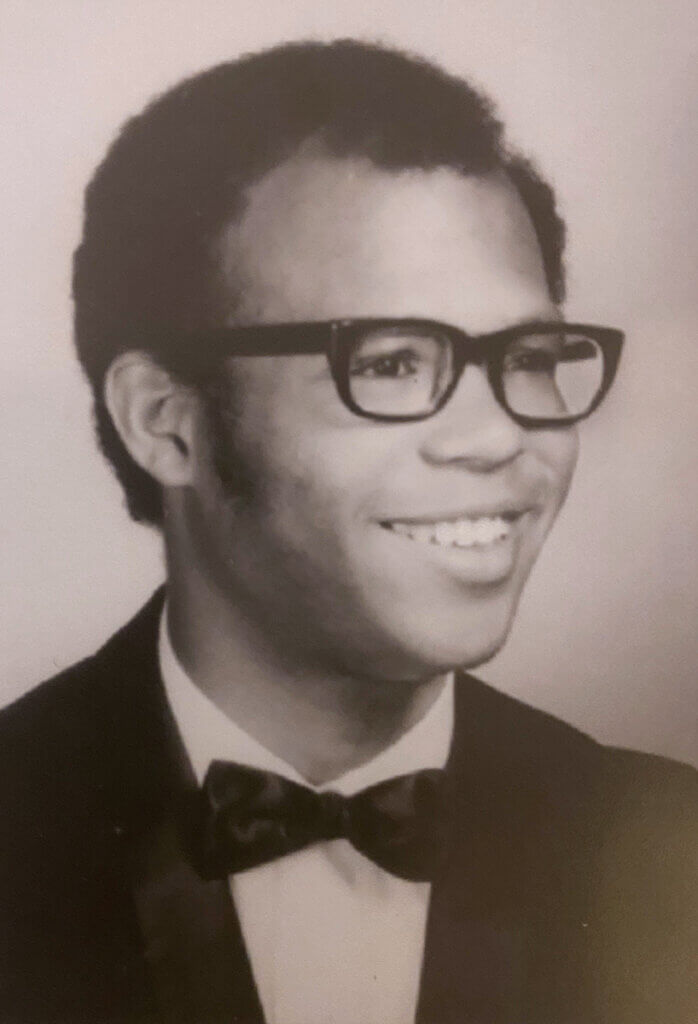
Dr. Dunn said his interest in veterinary medicine began at the age of 8 when his family took their dog to the local veterinarian and he was amazed at the fantastic work the veterinarian did to get their furry friend feeling better again. He knew from that moment he wanted to be a veterinarian and never once changed his mind all throughout his childhood and education.

Dr. Dunn grew up in Indianapolis and attended Shortridge High School where he said he was blessed with the ability to take two years of biology from a teacher with a PhD in the field. This experience not only increased his interest in veterinary medicine, but also prepared him for the rigorous education at Purdue University.

At the time, there were only about 19 veterinary medicine programs in the entire country and Dr. Dunn said he was fortunate to live in a state which had one, with Purdue offering the only DVM program available in Indiana.  During his time at Purdue, Dr. Dunn was a member of the Omega Psi Phi fraternity and also served as an advisor at McCutcheon Hall, a position that covered his tuition. Dr. Dunn encourages any college student in any major to take any kind of resident assistantship, work study position, or other job opportunity to be able to graduate with less debt.

When asked about advice for students studying veterinary medicine, Dr. Dunn explained that when students see any open door they should not be afraid to walk through it, and that sometimes you never know how your education may help you.  He recalls that while he was in veterinary school, students were required to study all varieties of animals regardless of their own interests. For example, even students who wanted to be small animal veterinarians had to take classes on treating livestock, which proved useful for Dr. Dunn because of the various fields he worked in later.

After graduation, Dr. Dunn took a position with Merrick Animal Hospital in Brookfield, Ill., where he worked from June 1971 to October 1972.  He then returned to Indianapolis to work for Eli Lilly and Company, where his father also had worked. His employment at Eli Lilly enabled him to serve in a myriad of positions and work with all sorts of animals from dogs and cats to pigs and horses. Dr. Dunn said he was well prepared to work with all of these creatures due to the diverse curriculum at the College of Veterinary Medicine.

After 28 years in the workforce, Dr. Dunn retired in January 2000 at the age of 52.  When asked for a final piece of advice for soon-to-be-graduates of the College of Veterinary Medicine, Dr. Dunn replied that while being devoted to your career is important, enjoying life is equally so. “I got where I am by working hard when I needed to and playing as hard when I needed to,” said Dr. Dunn.

Writer(s): Jonathan Martz, PVM Communications Intern | pvmnews@purdue.edu

Recent Stories

“Paws Up” – brought to you by the PVM Wellness Committee

This week, we are proud to recognize Lorraine Fox, who is a business assistant with the Veterinary Medicine Procurement Center.

PVM Interview Days Move College Closer to Admitting the DVM Class of 2030

After a total of three afternoons dedicated to conducting in-person interviews with 226 prospective veterinary students, the Purdue University College of Veterinary Medicine is close to completing the process of admitting 84 members of the incoming first-year DVM class – the Class of 2030.  The students invited for the interview days were selected from a total pool of 1,930 applicants from across the country as well as countries abroad.

Experts to Gather at Purdue for Conference Addressing the Public Health Threat of Antimicrobial Resistance

The ongoing challenges posed by multi-drug resistant infections will be the focus of a multidisciplinary conference taking place in three weeks at Purdue University.  The Fourth Annual Conference on Antimicrobial Resistance is set for February 25–26, 2026 at Purdue’s Stewart Center in West Lafayette. Registration is still open for the event, which will bring together scientists and scholars from human and veterinary medicine, public health, research, and industry to address the determinants, dynamics and deterrence of drug resistance.

PVM’s Upcoming Coppoc One Health Lecture to Focus on Dogs as Sentinels of Environmental Exposure

The Purdue University College of Veterinary Medicine brings a leading One Health scholar to campus each year to address vital health issues from a One Health perspective as part of the Coppoc One Health Lecture series.  This year’s presentation, scheduled for February 26 in Lynn Hall Room 2026, is on the engaging topic, “One Health at Home: Dogs as Sentinels of Environmental Exposure.” The speaker will be Audrey Ruple, DVM, MS, PhD, DACVPM, MRCVS, the Dorothy A. and Richard G. Metcalf Professor of Veterinary Medical Informatics at the Virginia-Maryland College of Veterinary Medicine at Virginia Tech.

“Paws Up” – brought to you by the PVM Wellness Committee

Today we are happy to acknowledge our Student Success Center Team.

One Health: A ‘digital twin’ model for predicting cancer outcomes

The striking similarities between invasive bladder cancer in dogs and humans have fueled research advances for more than three decades. Most of that work has looked at separate aspects of the disease — risk factors, early detection, symptoms, treatment and gene expression. But a new project at Purdue University that combines many types of available data in a “digital twin” model of bladder cancer may prove powerful enough to predict patient outcomes, starting with the probability of metastasis.

Purdue Professor Emeritus Bill Blevins Wins Lifetime Achievement Award at ACVR Annual Meeting

The American College of Veterinary Radiology (ACVR) gave its esteemed Lifetime Achievement Award for 2024 to Purdue Professor Emeritus Bill Blevins, who is well known to countless Purdue Veterinary Medicine alumni for the expertise he taught them about all things Diagnostic Imaging during his long Purdue career.