
Purdue University served as the place where local, national and international experts came together in-person and online recently for concentrated sharing of research, expertise and insight targeting the threat of multi-drug-resistant infections. The fourth annual AMR Conference February 25-26, 2026, held in Stewart Center, attracted more than 100 attendees from across the U.S. and six other countries.
The program was designed around three core segments – Determinants, Dynamics and Deterrence of Drug Resistance – with each segment featuring an invited external keynote presentation followed by shorter talks given by three Purdue University researchers with relevant expertise. Each segment concluded with a question-and-answer session featuring a panel consisting of all the speakers for that theme. The program aligns with the Purdue One Health Strategic Initiative that focuses on tackling complex challenges with real-world impact at the intersection of human, animal and plant health.
After opening remarks by Purdue University College of Veterinary Medicine Dean Bret Marsh, DVM, the first segment began with a keynote by Renee Fleeman, PhD, entitled, “Determinants: The Elements and Mechanisms of AMR.” Dr. Fleeman is an assistant professor at the University of Central Florida’s College of Medicine, where she serves on the faculty of the Burnett School of Biomedical Sciences. Her research focuses on elucidating the mechanisms bacteria utilize to resist antimicrobials to provide insight for developing novel therapeutics.
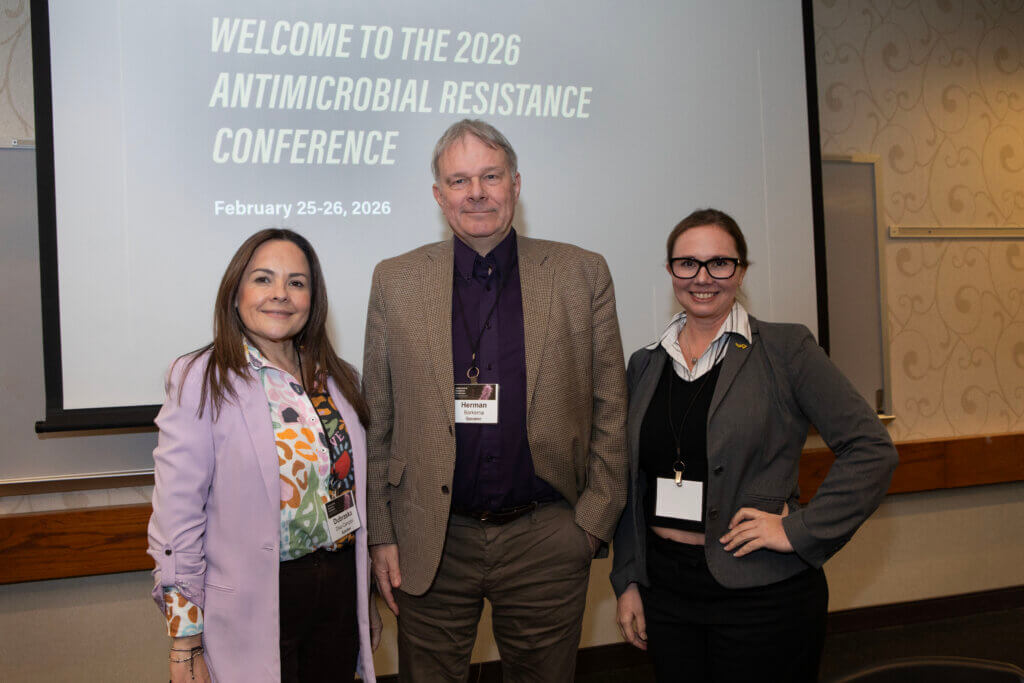
Dr. Fleeman received her Ph.D. from the University of South Florida in 2017. Then, as a post-doctoral researcher at the University of Texas at Austin, she was awarded the prestigious NIH Pathway to Independence Award (K99/R00). Her expertise is reflected in some 20 publications, numerous patents on antimicrobial therapeutics, and presentations given at national and international meetings. During her keynote, she shared about the threat of multidrug-resistant Klebsiella pneumoniae and her team’s discoveries regarding how antimicrobial peptides can overcome membrane-mediated colistin resistance.
Dr. Fleeman’s presentation was followed by these research talks:
- Seema Mattoo, PhD, associate professor in the Departments of Biological Sciences and Biochemistry at Purdue: “Leveraging Fic Proteins as Antimicrobials.”
- Tim Johnson, PhD, Purdue associate professor of animal sciences: “Antibiotic Resistance in Food Animal Microbiomes and Pathogens.”
- Mohit Verma, PhD, associate professor in Purdue’s Department of Agricultural and Biological Engineering and the Weldon School of Biomedical Engineering: “Field-Based Detection of Antimicrobial Resistance Using One Health Biosensors.”
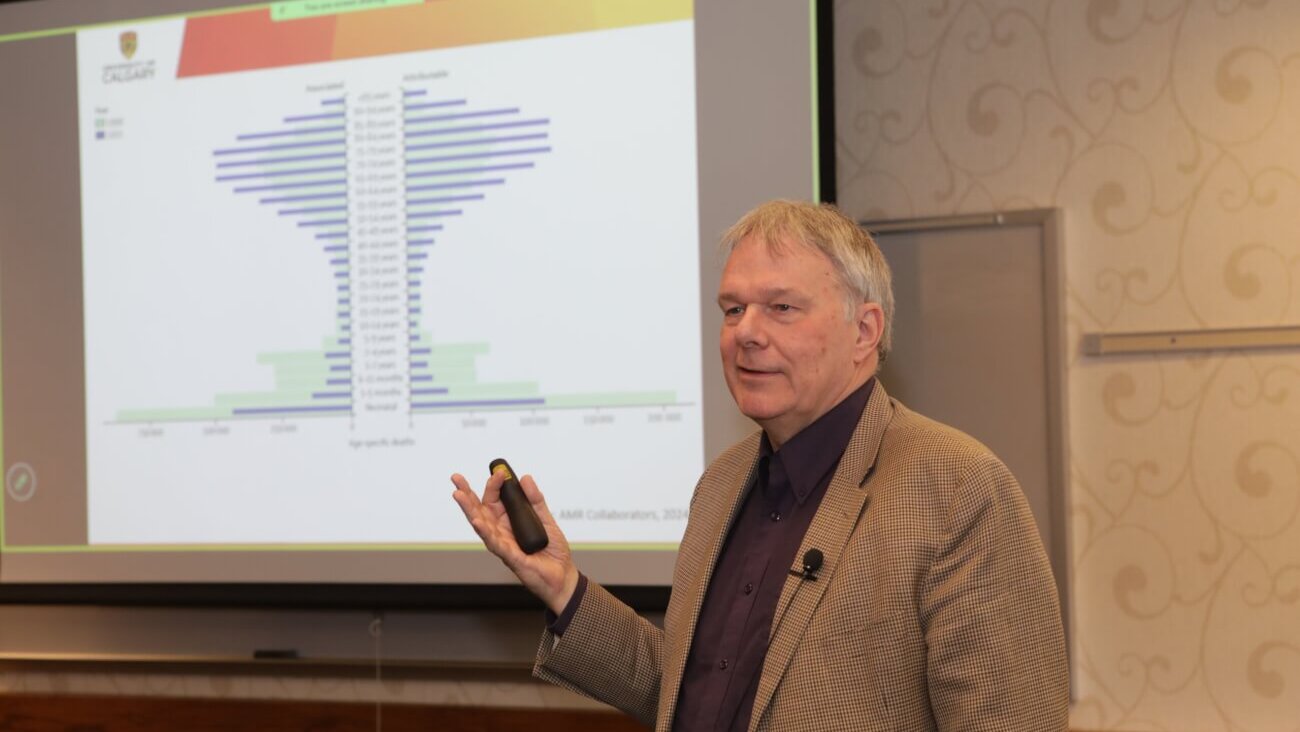
The afternoon session began with remarks by Dr. Herman Barkema, DVM, PhD, professor of epidemiology of infectious diseases, Faculty of Veterinary Medicine, University of Calgary (UCVM), who gave the Dynamics keynote on the topic, “Tackling AMR in Humans and Animals: One Health Approach for Fighting AMR.”
Dr. Barkema earned his DVM degree at Utrecht University, The Netherlands, and then served as manager of a large dairy and beef herd in Costa Rica before teaching bovine herd health at Utrecht University and working as an epidemiologist for the Dutch Animal Health Service while completing his PhD. In 2001, Dr. Barkema accepted a faculty appointment at the University of Prince Edward Island, after which he moved to the University of Calgary where he founded UCVM’s Department of Production Animal Health.
In addition to his faculty role, Dr. Barkema serves as NSERC (Natural Sciences and Engineering Research Council of Canada) Industrial Research Chair in Infectious Diseases of Dairy Cattle, and UN Universities Research Chair in Infectious Diseases in a Changing Climate, with a joint appointment in the Department of Community Health Sciences of the Cumming School of Medicine. His research program focuses on prevention and control of diseases in cattle herds, including antimicrobial resistance, with the goal of ensuring a safe and economical food supply with reduced risks of transmission of zoonotic diseases to farm families and the general public.
Dr. Barkema’s keynote presentation explored the issue of antimicrobial resistance through a global One Health lens, recognizing the interconnected health of humans, animals, and the environment. In particular. he highlighted the critical role of global cooperation and the need to support low- and middle-income countries in addressing AMR.
Dr. Barkema’s talk was followed by these research presentations:
- Arun Bhunia, PhD, Purdue professor of food microbiology: “A Next Generation Probiotic-Based Pathogen Exclusion Strategy.”
- Wendy Beauvais, BVetMed, MSc (Vet Epi), PhD, assistant professor of epidemiology and public health in the Purdue Veterinary Medicine Department of Comparative Pathobiology: “Developing a ‘Real-Time’ Antibiogram Dashboard.”
- Philip Paré, MS, PhD, Rita Lane and Norma Fries Assistant Professor of Electrical and Computer Engineering in Purdue’s Elmore Family School of Electrical and Computer Engineering: “A Framework for Counterfactual Analysis, Strategy Evaluation, and Control of Epidemics using Reproduction Number Estimates.”
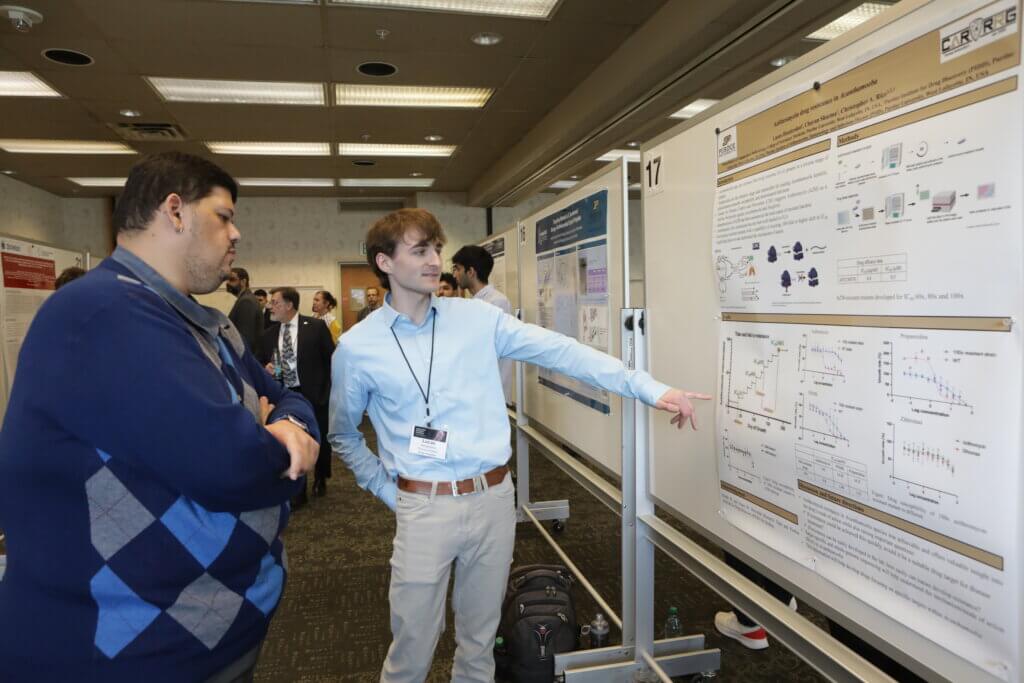
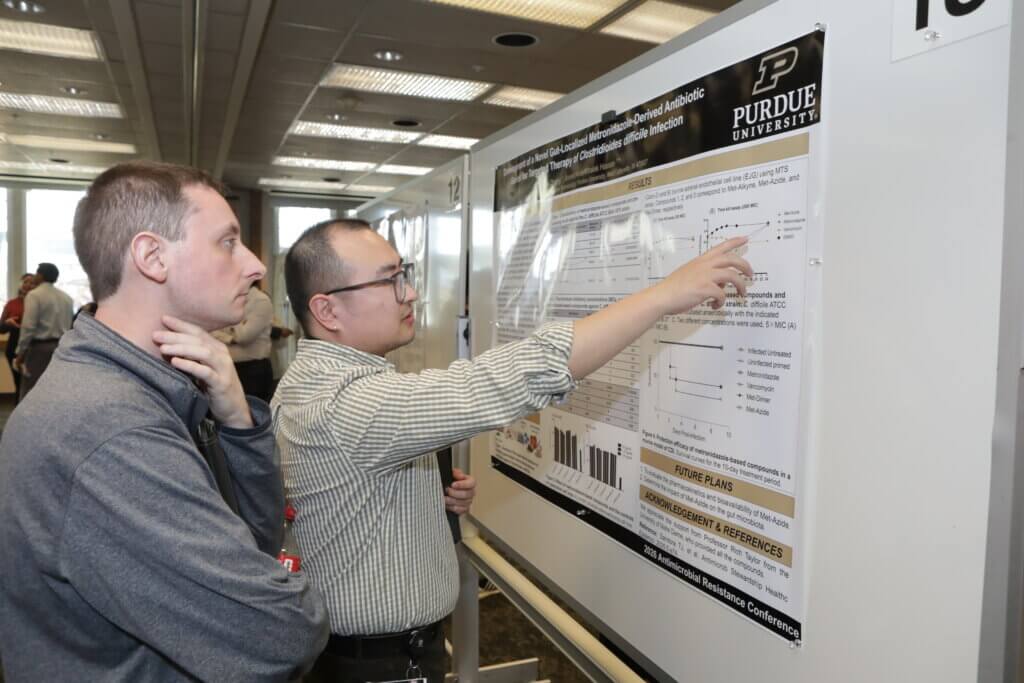
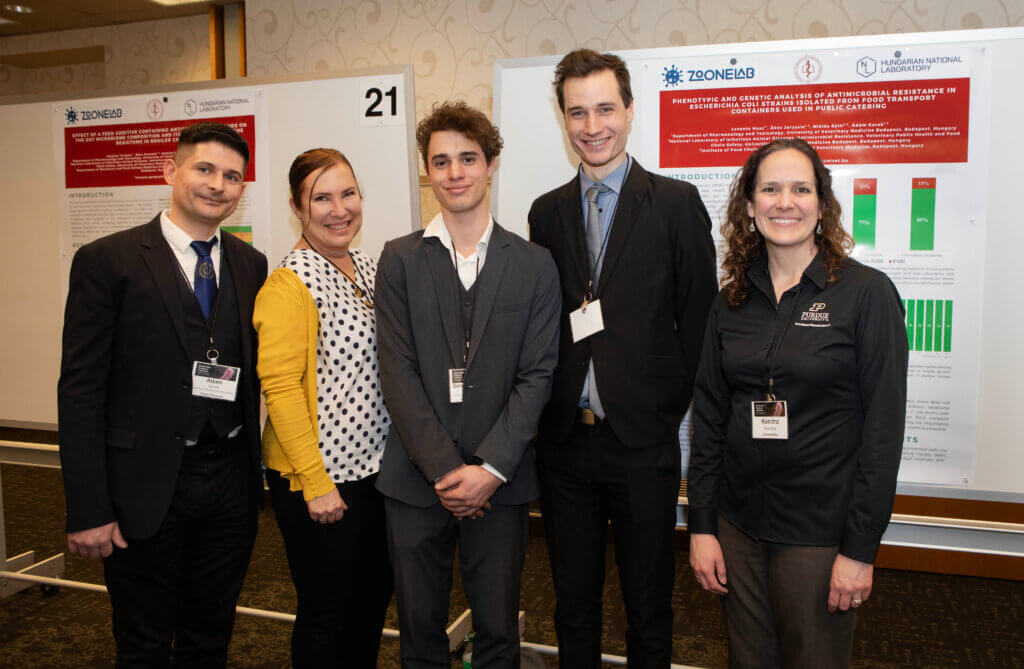
The afternoon program concluded with a reception and Research Poster Session that featured 22 submissions with three international presenters coming from Hungary. The posters were judged by a team of experts who selected first and second prize winners in Undergraduate and Graduate Student categories.
On the second day, the final segment of the conference began with the Deterrence Keynote by Dubraska Díaz-Campos, DVM, PhD, associate professor of clinical microbiology at The Ohio State University College of Veterinary Medicine. Her talk was entitled, “Control and Mitigations of AMR.”
Dr. Díaz-Campos earned her DVM degree at Universidad del Zulia, Venezuela, and taught infectious diseases for eight years before completing a residency in clinical microbiology and a PhD at Auburn University. After serving four years as assistant professor and director of Bacteriology/Parasitology at Washington State University, she accepted a faculty appointment at Ohio State, where she directs the Clinical Microbiology Lab, oversees infection control, and co-leads the companion animal antimicrobial stewardship program.
Dr. Díaz-Campos studies the pathogens that cause infectious diseases in animals, with particular emphasis on multidrug-resistant and zoonotic microorganisms and on advancing diagnostic stewardship. She explains that controlling antimicrobial resistance requires a coordinated, evidence-based approach that includes enhanced infection prevention and control, optimized antimicrobial use, and improved diagnostic practices. She notes that in veterinary medicine, these three components are critical but often underutilized tools for mitigating resistance within a One Health framework. Her keynote explored practical strategies for implementing antimicrobial stewardship programs in clinical settings, emphasizing the role of veterinarians and diagnostic laboratories in guiding responsible therapy.
Her presentation was followed by these three research talks:
- Zhong-Yin Zhang, PhD, head of the Borch Department of Medicinal Chemistry and Molecular Pharmacology in the Purdue College of Pharmacy and director of the Purdue Institute for Drug Discovery: “Targeting Mycobacterium Protein Tyrosine Phosphatases for Novel Anti-tuberculosis Agents.”
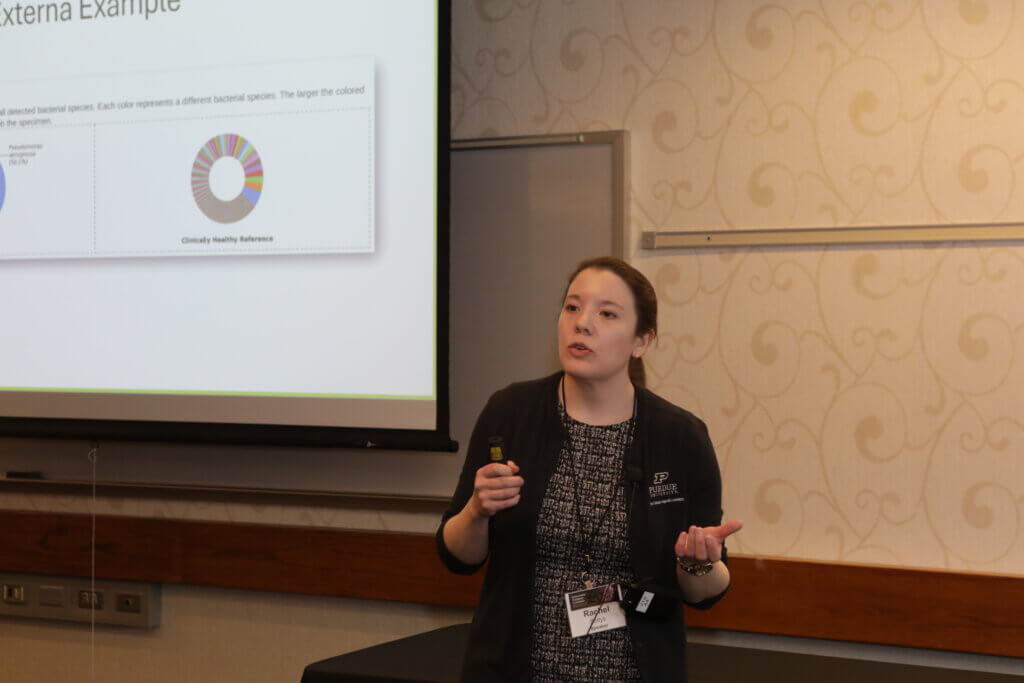
- Rachel Soltys, DVM, PhD, clinical assistant professor in the Department of Comparative Pathobiology and Bacteriology Section head at the Reed Animal Disease Diagnostic Laboratory: “Promises and Perils: The Role of Molecular Diagnostics in AMR Deterrence.”
- Philip Low, PhD, Presidential Scholar for Drug Discovery and Ralph C. Corley Distinguished Professor of Chemistry: “Design and Validation of Mutation-Resistant Therapies for Malaria and Influenza Virus Infections.”
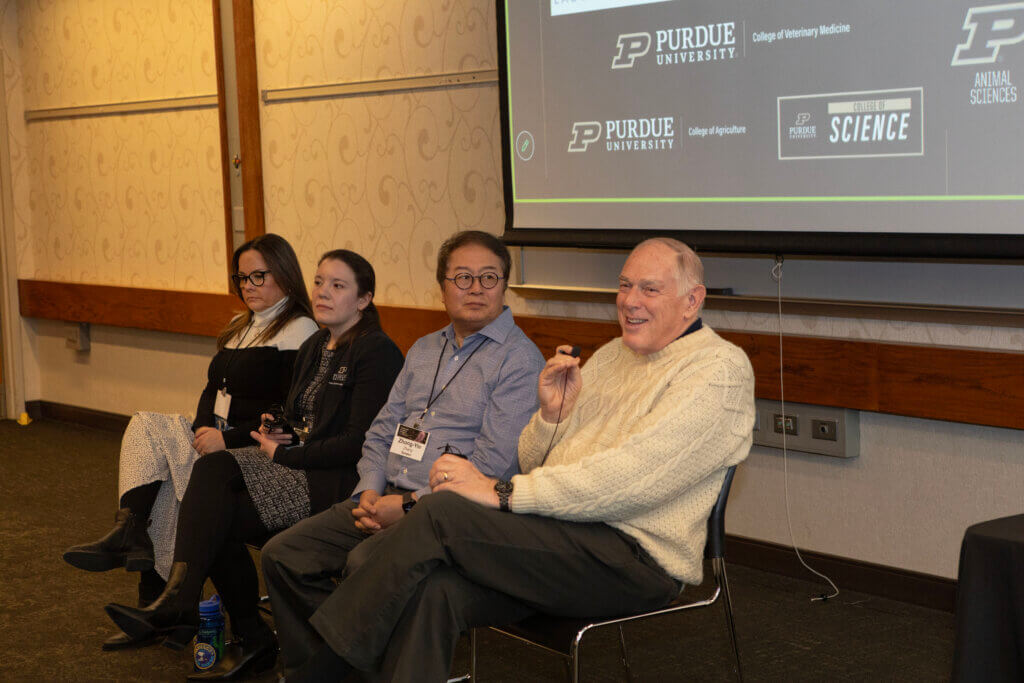
Sadly, Dr. Low’s talk, marked by his customarily calm and compelling delivery that blends powerful authenticity and a genuine sense of caring and compassion, proved to be his last presentation, as he passed away just a few days later on March 4. The AMR Conference planners shared afterword, “We, the organizing committee, and colleagues from the College of Veterinary Medicine, are saddened by the recent news of Dr. Low’s passing. We all send our condolences to the Low family during this difficult time. Dr. Low’s scholarship, compassion, and impact will continue to live on, saving countless lives through the legacy of his research and innovations.”
Dr. Low’s stunning and impactful career is summarized in a memorial tribute released by Purdue University.
