
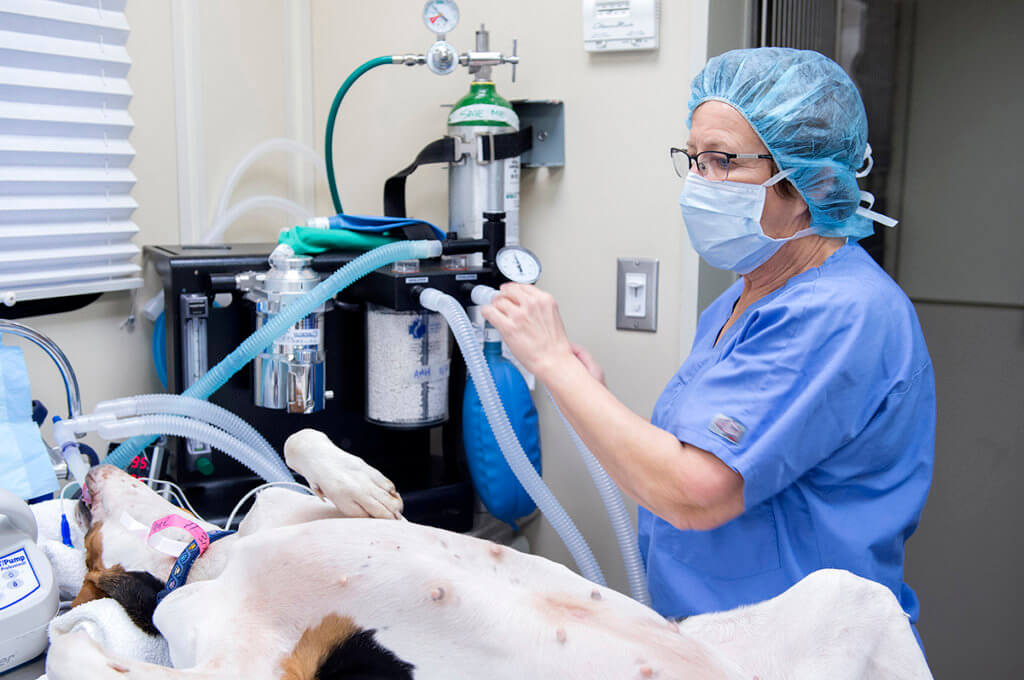
Dr. Lynetta Freeman checks the anesthesia for a dog named Jane before a spay operation. Priority 4 Paws, a Purdue Veterinary Medicine mobile spay and neuter unit, recently celebrated logging 100,000 miles. (Purdue University/ Mark Simons)
Dozens of Indiana animal shelters have limited resources when it comes to spaying and neutering the animals that come through their doors. The Priority 4 Paws traveling surgery unit with veterinary medicine students brings much-needed relief to those shelters, helping them reduce the time animals spend waiting for adoption while, at the same time, providing valuable educational opportunities for students.
Priority 4 Paws (P4P) is the Purdue University College of Veterinary Medicine’s mobile shelter medicine and surgery program that has helped spay and neuter more than 14,000 shelter animals since it was started in 2012. Just last month, the unit rolled over 100,000 miles on the odometer. Reaching those kinds of numbers is a milestone for Dr. Lynetta Freeman, who spearheaded the program and just retired as professor of small animal surgery. “I think making it to that many miles shows us that this is a program that is needed,” Dr. Freeman said.
P4P incorporates an elective course that allows fourth-year veterinary students to travel to Indiana animal shelters within driving distance and perform spay and neuter surgeries in the mobile unit. The clinic runs three days a week and two of those days are usually spent on the road, while one day is spent at Purdue. The students spend the remainder of their time doing assigned readings and online education.
Dr. Freeman believes the program has played a part in a movement to help address the issue of overcrowding and high euthanasia rates. She says shelter populations have decreased, and “save rates” – which is the percentage of animals adopted, reclaimed, or transferred – are around 90 percent. “When the program was first started, animals would stay for a really long time in shelters,” Dr. Freeman said. “That led to behavior problems and other issues that made them harder to adopt. Today, we go to shelters and sometimes we are doing surgeries on animals that are going home the very next day.”
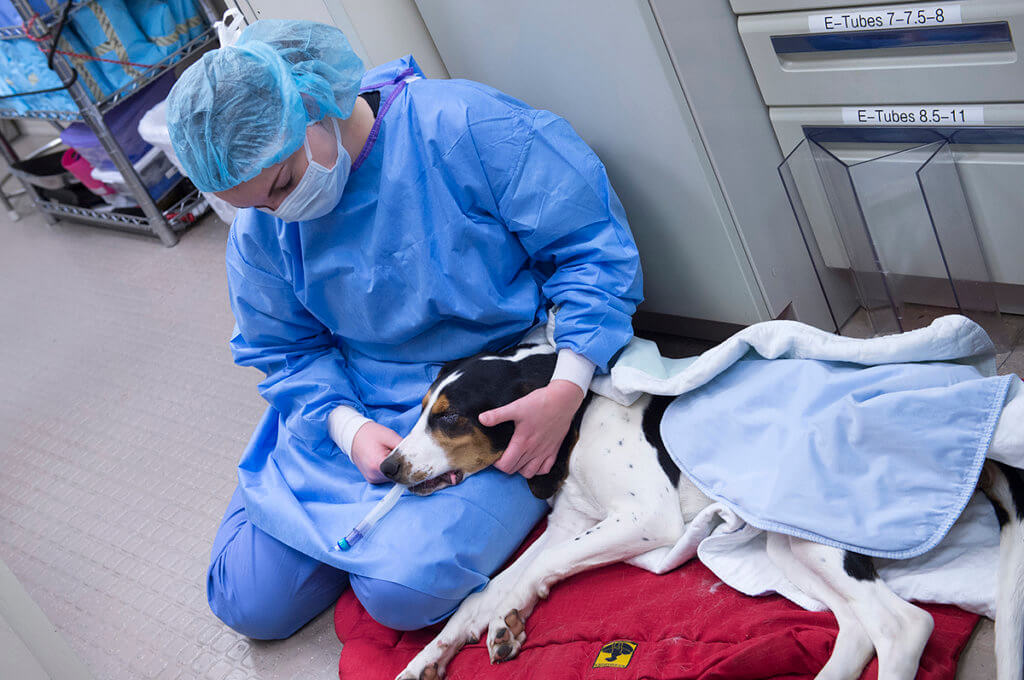
Veterinary medicine student Leslie Lundewall, of the DVM Class of 2019, helps Jake revive after his neuter surgery performed in the Priority 4 Paws mobile surgery unit. (Purdue University/ Mark Simons)
Dr. Freeman says being part of a solution has been eye-opening for students, too. “I think we are part of a big picture,” Dr. Freeman commented. “The big picture is trying to reduce the time animals spend in shelters and the numbers of animals presented to shelters. Having students play a role in that makes it all the more meaningful.”
During the three-week, elective rotation, students perform an average of 35 surgeries. That number is significant, Dr. Freeman says, because it helps Purdue veterinary students stand out among their peers after graduation. “Being able to do that many surgeries is rare,” Dr. Freeman explained. “Students who complete this rotation feel much more comfortable after they’re done. If they walk into a clinic on their first day on the job and someone says ‘Here, go spay this cat,’ they feel confident and prepared to do it right away.”
For Dr. Freeman, P4P also has cultivated a love for shelter medicine. When the program was started, she said a goal of hers was for students to gain surgical experience and to create a mindset of service. Looking back, Dr. Freeman says she thinks that has been accomplished. “It’s hard to measure, but I think our students walk away with a more philanthropic outlook,” Dr. Freeman said. “Being able to give back, and seeing the results, has been good for all of us.”
Click here to view a YouTube video about the program.
