
PVM Engagement Efforts Spotlighted in Popular Science Article

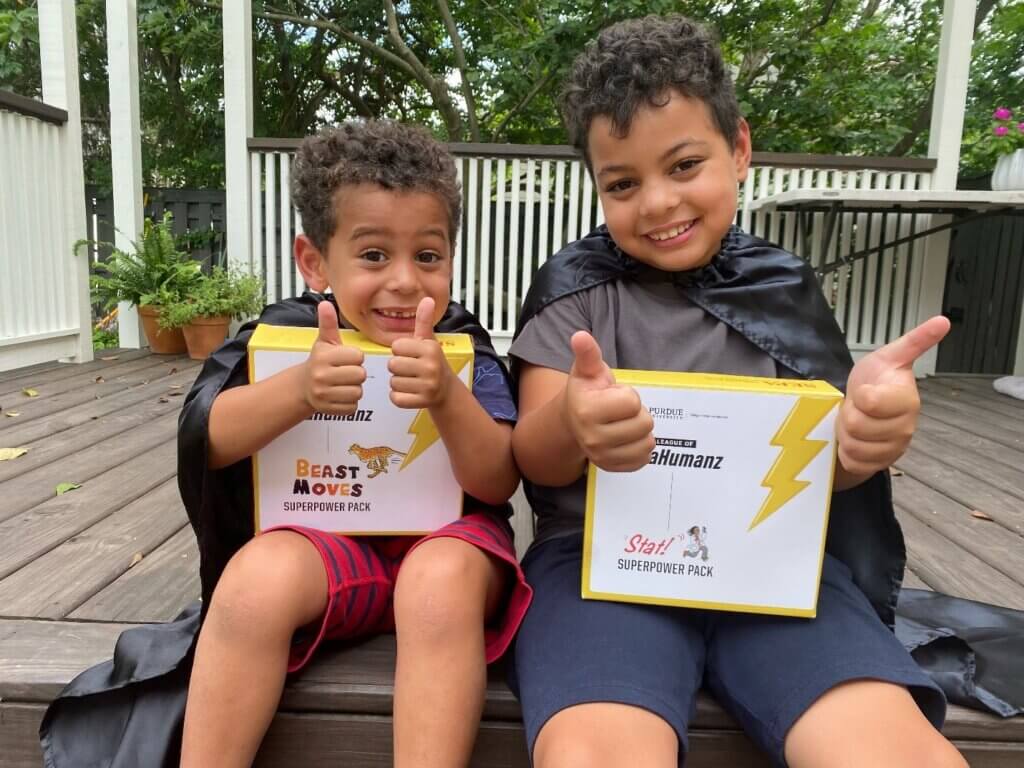
Two children in capes giving thumbs up while holding awards, seated outdoors.

A feature story writer for Popular Science magazine doing a story about ways to help children pursue veterinary careers recently turned to the Purdue University College of Veterinary Medicine for an expert who could address that topic.  The well-known Popular Science contributor, Noah Lederman, also has had his work featured in the Los Angeles Times, Scientific American, The Boston Globe, and The Washington Post.  The source he turned to at Purdue for his latest Popular Science article is Dr. Sandra San Miguel, associate dean for engagement.

Lederman’s article, which was just published this month, is entitled, “7 ways to support a kid who wants to care for animals.”  The subheading adds, “If you know where to look, there are plenty of educational opportunities for a child who wants to be a veterinarian.”  In describing some of those opportunities, Lederman gives the League of VetaHumanz, based out of Purdue Veterinary Medicine, as an example. 

Explaining that the concept of VetaHumanz was “Inspired by the metahumans of the DC comics universe,” Lederman quotes the League’s origin story in describing how VetaHumanz “wield their superpowers to prevent threats to animal and public health across the globe.”  The League of VetaHumanz was launched by Purdue Veterinary Medicine in 2020 as an alliance of veterinary superheroes in academia, veterinary practice, research, government, and industry who are committed to engaging with under-resourced communities across the globe to provide access and support for children who aspire to careers in the veterinary profession.

Lederman then describes how, with support from the National Institute of General Medical Sciences (NIGMS) of the National Institutes of Health, Dr. San Miguel’s team sends trained veterinary practitioners into K-4 classrooms around the country to educate students with age-appropriate and culturally-responsible curriculum. “We’re not visiting [once a year] on career day and you never see us again,” Dr. San Miguel is quoted as saying in the story.  Lederman points out that the program involves a partnership between the League and selected schools or community centers, where veterinary role models work with young students at least once a month.

The article also highlights the League’s “Superpower Packs,” which are inspiring, STEM educational experiences that can be used independently by children who lack direct access to veterinary role models. Lederman writes, “The packs, San Miguel says, informs kids that ‘I can be a vet. I’m doing vet stuff.’” Lederman then explains how Dr. San Miguel was inspired by research on the Batman Effect, where scholars asked young subjects to impersonate an exemplary character, like Batman, and found that kids in the study who took on a commendable character’s perspective persevered in their work, as compared to children who did not.  “If you take on an alter ego, you lose your personal insecurities,” Dr. San Miguel is quoted as saying when summarizing the research.  Lederman adds, “So of course, the pack includes a cape.”

The article also points out that, though the SuperPower Packs are only available to qualified institutions, the League of VetaHumanz offers all of the lessons and books on its website for free to young children interested in the profession.

Read the full article on Popular Science.

Writer(s): Kevin Doerr | pvmnews@purdue.edu

Recent Stories

PVM Summer Research Program Launches a Season of Mentorship and Discovery

For 15 aspiring researchers, the start of summer marked the beginning of an immersive journey in scientific discovery through the Purdue Veterinary Medicine’s 2026 Veterinary Scholars Summer Research Program. The respected annual program pairs veterinary students and undergraduate students from Purdue and other universities with faculty mentors, providing hands-on experience in clinical and basic science research while helping to foster the next generation of veterinary and biomedical scientists.

PVM Specialists Receive Prestigious Awards at ACVIM Recognition Program

Congratulations are in order for Purdue Veterinary Medicine alumni and faculty who are American College of Veterinary Internal Medicine (ACVIM) Diplomates and have been honored as 2026 ACVIM Recognition Award Recipients. Each year, the ACVIM Recognition Awards give the specialty college an opportunity to honor outstanding specialists who have pushed boundaries, elevated standards, and inspired generations of veterinary specialists.

“Paws Up” for Chandra Whippen – brought to you by the PVM Wellness Committee

This week, we are happy to recognize Chandra Whippen, RVT, who is one of our veterinary technologists specializing in Cardiology.

In Memory – Dr. John Baker (PU DVM ’81); Dr. Timothy Bartlett (PU DVM ’81)

The Purdue Veterinary Medicine community is saddened to learn of the passing of two members of the DVM Class of 1981 - Dr. John Baker and Dr. Timothy Bartlett. Both were 70 years old.

“Paws Up” for Kyle Moffitt – brought to you by the PVM Wellness Committee

Today we extend appreciation for Kyle Moffitt who is a Senior IT Technician in PVMIT.

Purdue Veterinary Hospital Participates in One-Day National Effort to Preserve Sight of Service Dogs

The Purdue University Veterinary Hospital’s Ophthalmology Service came to the aid of canines dedicated to lives of service recently during a special day set aside for checking the eye health of service dogs. On May 12, the Ophthalmology Service participated in the American College of Veterinary Ophthalmologists (ACVO)/Epicur National Service Animal Eye Exam event by providing free eye exams for qualified service dogs.

Sophie’s Comeback: Purdue Veterinary Specialists Help a Lame Dog Walk Again

A series of articles about animals and their owners who’ve found help and healing at the Purdue University Veterinary Hospital continues today as we share Sophie’s story. This story begins two years ago when an Easter morning emergency resulted in Sophie being brought to the hospital where veterinarians in the Neurology and Neurosurgery Service gave the paralyzed dog a second chance to walk.

Summer Break Signals Start of Summer Research for Purdue Veterinary Scholars

A feast of classic Indiana picnic food marked the traditional kick-off for the Purdue University College of Veterinary Medicine’s Veterinary Scholars Summer Research Program. The annual program provides an opportunity for Purdue veterinary students as well as undergraduate students from Purdue and other universities to experience what it is like to conduct clinical and basic science research as they work with a faculty mentor to carry out a summer research project.