
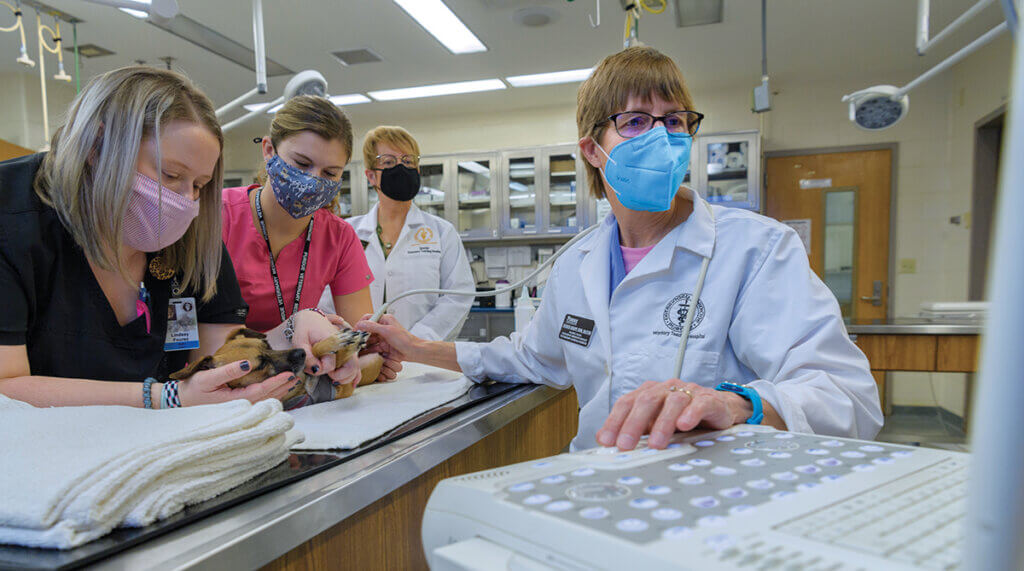
Distinguished Professor of Comparative Oncology and Dolores L. McCall Professor of Comparative Oncology Deborah Knapp recently marked a milestone in her career. As an endowed professor, Purdue University requires Dr. Knapp undergo a review by her department every five years with the latest review completed last month. Dr. Knapp was first named the Dolores L. McCall Professor of Comparative Oncology in 2006 and has held the title ever since. As part of the review, Dr. Knapp was asked to present a seminar highlighting some of her research team’s success.
The seminar entitled, “Cancer Prevention in Dogs: Strategies That Can Be Implemented Now to Improve Outcomes,” was presented virtually December 11, 2020. After an introduction by Dr. Catharine Scott-Moncrieff, head of the PVM Department of Veterinary Clinical Sciences, Dr. Knapp began her lecture by describing the current state of cancer cases in the United States. Last year, there were 1.7 million new cases of human cancer reported with 600,000 of these resulting in death. As for dogs, approximately 4 million cases were expected in 2020 with the total number of deaths unknown. Dr. Knapp’s team has tasked themselves with looking at ways to improve the outcome for humans and dogs.
In describing a key to improving the outcome for both, Dr. Knapp explained that certain forms of naturally-occurring cancer in dogs are very closely related to cancers in humans, allowing treatment methods to be studied interchangeably. In addition to defining cancer by the organ in which it originates (i.e. breast cancer), researchers have found that in many cases they can better define the cancer by its mutations and molecular makeup of the cancer. For instance, a subset of bladder cancer in dogs may be more closely related to colon cancer in people.
Dr. Knapp described that one way to improve cancer outcomes in humans and dogs is to improve the use of current drugs such as Cyclooxygenase (Cox) Inhibitors, also known as Non-Steroidal Anti-Inflammatory Drugs. These drugs have anti-cancer properties and are a good example of drugs that can be repurposed. Additionally, new drugs, such as immunotherapies, are currently being studied. The Purdue University College of Veterinary Medicine has recently received a research grant to improve knowledge of these methods. Another area that has the potential to make a big difference in cancer outcomes for humans and dogs is individualized care.
The primary focus of improvement described in the lecture is prevention. Cancer prevention comes in three forms. Primary cancer prevention is preventing the entire cancer development, such as not smoking to avoid lung cancer. Secondary cancer prevention is the detection of precancerous symptoms with testing such as mammograms and colonoscopies and treating them before they become aggressive cancers. Tertiary cancer prevention is the treatment of cancer once it is diagnosed to prevent morbidity and mortality.
Dr. Knapp focused on prevention in regard to bladder cancer, which most of the time is known as high grade invasive urothelial carcinoma, transitional cell carcinoma, aggressive bladder cancer, or in humans is called muscle invasive bladder cancer – all essentially the same disease. Dr. Knapp said primary cancer prevention for dogs includes limiting risk factors such as the use of lawn care chemicals; obesity; the use of old generation flea, tick, and mange dips; and exposure to second-hand smoke. Emerging data now suggest that exposure to smoking could be important to bladder cancer in dogs. On the other hand, feeding vegetables to dogs can reduce the risk of cancer. There is now evidence to suggest spayed and neutered dogs are more at risk for cancer than dogs that are not spayed or neutered. Dr. Knapp certainly does not recommend ending the practice of spaying and neutering entirely, but said the optimal time for surgery requires further study, and this raises the question of whether waiting until the dog is a year old should be considered. More studies are needed to answer this question.
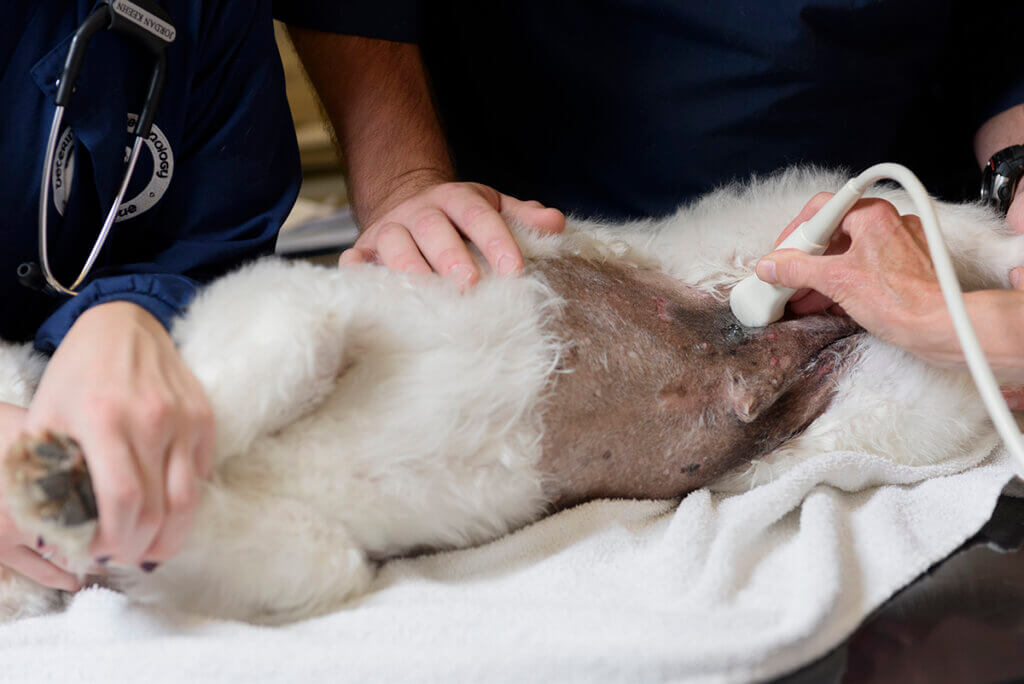
Secondary cancer prevention of bladder cancer can come in the form of early detection of precancerous lesions such as dysplasia and carcinoma in situ. In this stage, the cancer is less advanced and should be easier for the drugs to treat. Additionally, the immune system should be in a more active state to combat the cancer. This prevention strategy was tested by Dr. Knapp and her team in an early detection, early intervention study in which Scottish Terriers, a high-risk breed for bladder cancer, were studied. The study was completed in collaboration with the Scottish Terrier Club of America, which provided funding. The dogs were examined every six months for three years. Preliminary study results show that bladder cancer can be detected early, and early detection does improve the outlook for the dogs. Further evaluation is currently underway by Dr. Knapp and her study collaborators.
There are several key strategies that can be implemented now to improve cancer outcomes. Avoiding factors that increase the bladder cancer risk is important. Early detection and intervention are emerging as vital to improving the outcome for dogs with bladder cancer.
Dr. Knapp earned her DVM degree at Auburn University and in 1985 came to Purdue where she completed her residency and earned a master’s degree in 1988. She then became board certified by the American College of Veterinary Internal Medicine (Oncology). She was named a Distinguished Professor of Comparative Oncology by the university in 2020. Dr. Knapp leads the Purdue Comparative Oncology Program and is regarded as the leading expert in the field of naturally occurring bladder cancer in dogs. Her research has established bladder cancer in dogs as the most relevant animal model for invasive bladder cancer in humans. She is the author of more than 100 peer-reviewed journal articles related to the subject.
